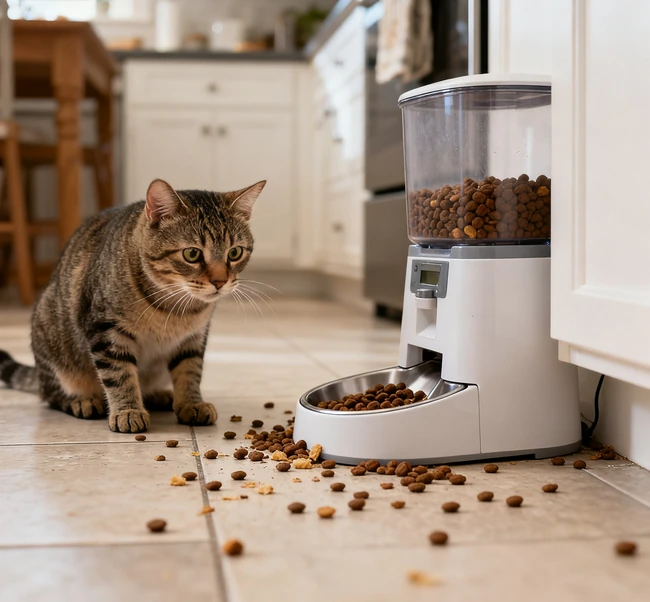
Key Disadvantages of Automatic Pet Feeders
While convenient, automatic feeders are not a one-size-fits-all solution. They come with a set of limitations that can impact your pet’s health, your wallet, and your overall experience. Here’s a detailed breakdown of the most significant drawbacks.
1. Lack of Human-Pet Bonding During Meals
Feeding time is a fundamental part of the bond between a pet and their owner. The simple act of filling a bowl provides a moment of connection and reassurance. When this ritual is handed over to a machine, some pets may feel a loss of interaction, which can be particularly impactful for animals that are highly social or prone to separation anxiety. The absence of this daily routine can subtly change the dynamic of your relationship.
2. Potential for Malfunctions and Technical Failures
Like any electronic device, automatic feeders are susceptible to problems. These can range from minor inconveniences to serious failures that prevent your pet from eating.
- Power Outages: Unless the feeder has a reliable battery backup, a simple power cut can stop scheduled meals entirely.
- Jamming Mechanisms: Pet food, especially kibble with varied shapes and sizes, can get stuck in the dispensing mechanism. We’ve seen this happen during our tests with certain models, which is why we prioritize anti-jam designs like the Vacqueen WiFi feeder.
- App/Connectivity Issues: Smart feeders that rely on WiFi or Bluetooth can suffer from connection drops, rendering remote control features useless.
3. Limited Food Type Compatibility
Most automatic feeders on the market are designed exclusively for dry kibble. If your pet eats wet food, a raw diet, or a combination, your options are severely limited. Even with dry food, issues can arise:
- Food Freshness: Kibble left in a large hopper for days can become stale and lose its nutritional value and palatability.
- Size and Shape Constraints: Large or irregularly shaped kibble, or food with mix-ins, may not dispense correctly.
4. Risk of Overfeeding and Weight Gain
This is a critical disadvantage, especially for pets prone to obesity. While portion control is a stated benefit, it can easily become a liability.
- Inaccurate Portion Sizes: Not all feeders dispense the exact same amount every time. Slight variations can add up, leading to unintended overfeeding.
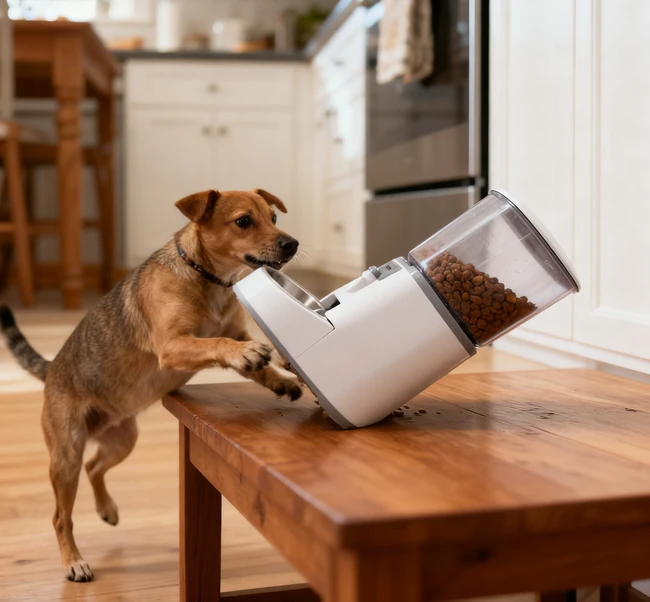
- Pets “Gaming” the System: Some clever pets learn to shake or paw at gravity-fed models like the COZOFU Automatic Gravity Dog Feeder, causing extra food to spill out.
- Out-of-Sight, Out-of-Mind: When you’re not physically serving meals, it’s easier to lose track of how much your pet is actually consuming.
5. Not Suitable for All Pets or Households
Your pet’s personality and your home setup play a huge role in whether an automatic feeder will work.
- Multi-Pet Homes: A standard feeder cannot stop a greedy pet from eating a shy pet’s share. You would need a specialized microchip-enabled feeder, which is a much larger investment.
- Anxious or Destructive Pets: Some animals may become stressed or frustrated by the machine and attempt to break into it, potentially harming themselves or destroying the feeder.
- Pets with Specific Medical Conditions: Diabetic pets, for example, often require precise meal timing and monitoring that may be beyond the capability of a basic automatic feeder.
6. Hygiene and Cleaning Challenges
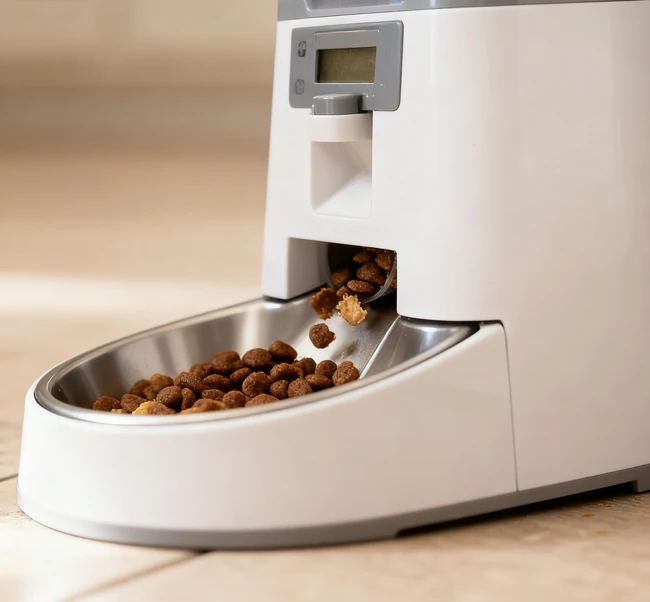
Automatic feeders are more complex to clean than a simple bowl. Food dust and oils can accumulate in the hopper and dispensing chute, creating a breeding ground for bacteria and attracting pests. Many models have multiple nooks and crannies that are difficult to access, making a thorough clean a time-consuming task. Failure to clean regularly can lead to contamination and health issues for your pet.
7. The Financial Investment
A reliable, feature-rich automatic feeder is not a trivial purchase. While basic gravity feeders like the Kacoomi Automatic Pet Feeder & Water Dispenser are more affordable, advanced smart feeders with app control, battery backup, and anti-jam technology come with a significantly higher price tag. You must weigh the convenience against the upfront cost.
Weighing the Pros and Cons: A Quick Comparison
| Advantage | Corresponding Disadvantage/Risk |
|---|---|
| Consistent Feeding Schedule | Total reliance on a machine that can malfunction. |
| Portion Control | Risk of inaccurate dispensing or pets manipulating the feeder to overeat. |
| Convenience for Busy Owners | Loss of bonding interaction during meal times. |
| Ability to Feed While Away | Limited to dry food and requires trust in the device’s reliability. |
Mitigating the Disadvantages: Our Testing-Based Advice
Knowing the disadvantages allows you to choose a feeder that minimizes these risks. At GoFeedPet, our 30-day real-world testing process focuses heavily on these pain points. Here’s what we recommend:
- Choose a Feeder with Dual Power: Always opt for a model with a plug-in adapter and a battery backup. This is a non-negotiable feature for reliability.
- Prioritize Easy Cleaning: Look for feeders with removable, dishwasher-safe bowls and hoppers you can easily access. Stainless steel bowls, like those on the Miaosical Dual Automatic Cat Feeder, are more hygienic than plastic.
- Test for Your Pet’s Food: Before fully committing, run your pet’s specific kibble through the feeder for several days to check for consistent portioning and any jamming issues.
- Don’t Go Fully Hands-Off: Even with an automatic feeder, make a point to be present for some meals to maintain your bond and monitor your pet’s eating behavior.
Frequently Asked Questions
Can an automatic feeder make my pet overweight?
Yes, it can. If the portion sizes are set incorrectly, the feeder dispenses inaccurately, or your pet learns to manipulate it for extra food, weight gain is a real risk. It’s crucial to monitor your pet’s weight and adjust portions as needed, just as you would with manual feeding.
Are automatic feeders safe for all dogs and cats?
No. They are generally not recommended for pets with severe food aggression, those that are highly destructive, or pets with specific medical conditions like diabetes that require strict, monitored feeding. Always consult your veterinarian if you are unsure.
What is the most common problem with automatic feeders?
Based on our testing, the most common issues are food jams in the dispensing mechanism and power-related failures. This is why we emphasize the importance of anti-jam technology and dual power sources in our reviews of models like the PETLIBRO 5G WiFi Automatic Pet Feeder.
How does GoFeedPet test automatic feeders for these disadvantages?
At GoFeedPet, we conduct hands-on testing with our own pets for a minimum of 30 days. We evaluate reliability by testing portion consistency over hundreds of cycles, simulate power outages to check battery backup, try different kibble shapes to assess jamming risk, and disassemble units to judge cleaning difficulty. Our goal is to identify these potential disadvantages before you do.
Is a gravity feeder or a programmable feeder a better choice?
Gravity feeders (like the COZOFU model) are simple and inexpensive but offer no portion control, which greatly increases the risk of overeating. Programmable timed feeders (such as the Nityers Automatic Dog Feeder) are almost always a safer and better choice for weight management.
Can I use an automatic feeder for wet food?
It is very challenging. Most feeders are not designed for wet food, which spoils quickly and is difficult to dispense. There are a few specialized cool-feeding models, but they are rare, expensive, and require meticulous cleaning.
Related Topics
- Automatic Pet Feeders
- Best Automatic Cat Feeders for Portion Control
- Automatic Feeders for Multiple Cats
- Battery-Powered Pet Feeders
- WiFi Smart Pet Feeders
Conclusion
Automatic feeders are powerful tools for pet care convenience, but they are not a perfect substitute for an owner’s attentive care. The disadvantages—from potential malfunctions and overfeeding risks to the loss of bonding time—are significant and must be carefully weighed. The key to success lies in choosing a well-designed, reliable feeder from a trusted source and never becoming completely complacent. Use it as an aid, not a replacement, for your responsibility.
For more in-depth, hands-on reviews and guides to help you navigate the complexities of pet products, we invite you to explore all of our resources at GoFeedPet. Our pet reviews & guides are designed to give you the confidence to make the best choices for your furry family members.
![Do Automatic Cat Feeders Work for Multiple Cats? [2026 Guide]](https://gofeedpet.com/wp-content/uploads/2026/04/ScreenShot_2026-04-02_213312_189-300x252.jpg)