Best Pet Water Fountains 2025 - Cat & Dog Fountain Reviews
Water Fountains
🏆 Expert Reviews 2025

Water Fountains

Expert reviews of 15+ best pet water fountains for cats & dogs. Compare stainless steel, ceramic & plastic models. Quiet pumps, filters & easy cleaning. Keep pets hydrated.

Products 50+
Rating Expert Verified
Updated November 2025
50+ Products Tested
30 Days Testing Period
$5,000+ Invested in Testing
100% Independent Reviews

At a Glance: Best Water Fountains to Buy in 2025

Our reviews are based on extensive research and, when possible, hands-on testing. Each time you make a purchase through one of our independently-chosen links, we may earn a commission. Learn more about our affiliate disclosure.

No products found in this category.

💧 Buying Guide: How to Choose the Best Pet Water Fountain

Keeping your pet properly hydrated is essential for their health, and a quality water fountain can encourage them to drink more water. After testing over 40 different pet water fountains with cats and dogs of various sizes, we've created this comprehensive guide to help you select the perfect fountain for your furry friend.

1. Material Types: Pros & Cons

The material affects durability, hygiene, and maintenance:
  • Stainless steel: Most hygienic, dishwasher-safe, durable, doesn't harbor bacteria, no BPA. Best for most pets. Can be noisy on hard floors.
  • Ceramic: Heavy and stable, dishwasher-safe, stylish designs, doesn't retain odors. Great for cats. Can chip or crack if dropped.
  • BPA-free plastic: Lightweight, affordable, quiet operation, variety of designs. Budget-friendly option. Can scratch and harbor bacteria over time.
  • Glass: Non-porous, easy to clean, modern look. Less common but very hygienic. Fragile and expensive.

2. Capacity & Size Considerations

Choose based on your pet's size and number of pets:
  • Small (1-2 liters / 34-68 oz): Perfect for single cats or small dogs, compact footprint, easier to clean
  • Medium (2-3 liters / 68-100 oz): Ideal for 1-2 medium dogs or multiple cats, balanced size
  • Large (3-6 liters / 100-200 oz): Best for large dogs, multiple pets, or extended trips, less frequent refilling
  • Extra-large (6+ liters / 200+ oz): Multi-pet households, very large dogs, minimal maintenance

3. Water Flow Styles

Different flow patterns appeal to different pets:
  • Waterfall/cascade flow: Most popular with cats, mimics natural running water, visually appealing, encourages drinking
  • Fountain stream: Vertical water stream, attracts playful pets, high aeration, can splash more
  • Gentle bubble flow: Quiet operation, minimal splashing, good for timid pets or senior animals
  • Multi-stream: Multiple water flow options in one fountain, versatile for different pet preferences
  • Faucet-style: Mimics drinking from a tap, great for cats who love sink water

4. Filtration System

Proper filtration keeps water fresh and clean:
  • Activated carbon filters: Remove odors, chlorine, and bad tastes. Most common type. Replace every 2-4 weeks.
  • Multi-stage filtration: Combines carbon, ion exchange resin, and physical filtration. Superior water quality. More expensive.
  • Pre-filter foam/sponge: Catches hair and debris before reaching main filter. Extends filter life. Rinse weekly.
  • Triple filtration: Premium systems with three layers of filtration. Best water quality. Higher ongoing costs.
  • Filter replacement cost: Factor in $3-$8 per filter, replaced monthly. Budget $40-$100 annually.

5. Pump Quality & Noise Level

A quiet, reliable pump is essential:
  • Ultra-quiet pumps: Under 30 decibels, won't disturb sleep, ideal for bedrooms. Premium feature.
  • Standard pumps: 30-40 decibels, noticeable but not disruptive. Most common in mid-range fountains.
  • Submersible pumps: Quieter operation, easier to clean, longer lifespan. Preferred design.
  • Adjustable flow rate: Control water flow speed and noise level. Great for customization.
  • Pump longevity: Quality pumps last 2-3 years. Look for replaceable pumps for long-term value.

6. Power Source Options

Consider convenience and safety:
  • AC power (plug-in): Most common, continuous operation, reliable. Requires nearby outlet. Cord length matters (5-6 feet ideal).
  • USB powered: Portable, can use power banks, safer voltage. Lower pump power. Good for travel.
  • Battery backup: Rare but valuable for power outages. Maintains circulation during outages. Premium feature.
  • Cordless/wireless: Battery-operated, portable, no cord hazard. Requires frequent recharging. Limited options.

7. Ease of Cleaning & Maintenance

Regular cleaning is crucial for pet health:
  • Dishwasher-safe parts: Top-rack safe components save time. Stainless steel and ceramic are best.
  • Wide opening design: Hand can fit inside for thorough scrubbing. Essential for removing biofilm.
  • Minimal parts: Fewer components mean easier assembly and cleaning. Look for 3-5 piece designs.
  • Smooth surfaces: No hard-to-reach crevices where bacteria can hide. Rounded corners are easier to clean.
  • Removable pump: Easy pump access for cleaning prevents clogs and extends lifespan.
  • Cleaning frequency: Deep clean weekly, rinse daily, replace filters monthly for optimal hygiene.

8. Special Features to Consider

Advanced features that add value:
  • LED lights: Nightlight function, helps pets find water in dark, some indicate low water level
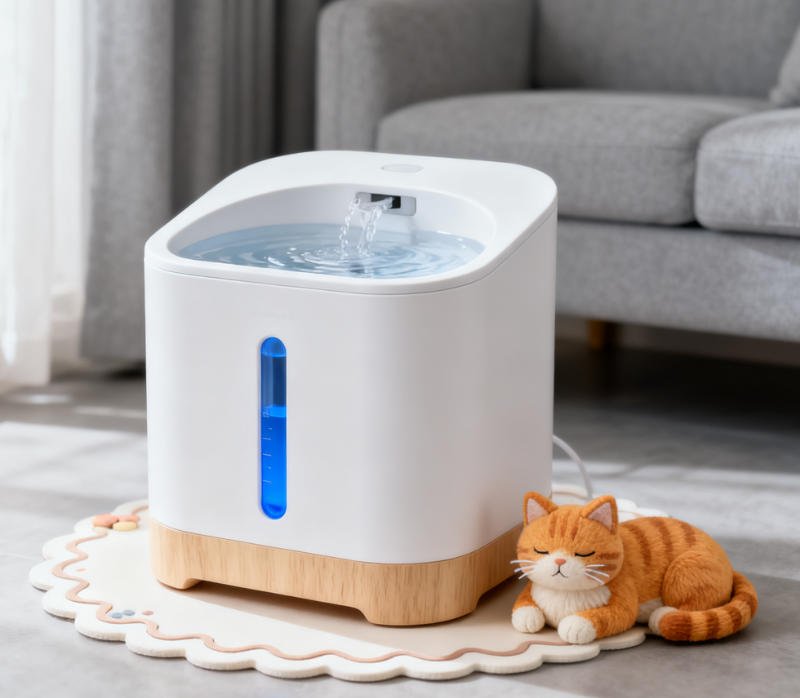
  • Water level window: See water level at a glance, prevents pump from running dry
  • Automatic shut-off: Protects pump when water is low, prevents overheating and damage
  • Splash guard: Reduces water spillage, keeps floor dry, especially important for enthusiastic drinkers
  • Non-slip base: Prevents fountain from sliding, rubber feet or silicone base, reduces noise
  • Wireless operation: No cords for pets to chew, safer for curious pets, rechargeable battery

9. Health Benefits of Water Fountains

Why fountains are better than bowls:
  • Increased water intake: Pets drink 20-30% more from fountains vs. static bowls
  • Kidney health: Better hydration supports kidney function, especially important for cats
  • Urinary tract health: Reduces risk of crystals, stones, and UTIs through dilution
  • Fresher water: Circulation and filtration prevent stagnation and bacterial growth
  • Oxygen enrichment: Flowing water contains more oxygen, tastes fresher to pets
  • Encourages picky drinkers: Movement attracts pets who ignore still water

10. Price Range & What to Expect

Understanding the cost spectrum:
  • Budget ($15-$30): Basic plastic fountains, simple designs, standard pumps, basic filtration
  • Mid-range ($30-$60): Better materials, quieter pumps, multi-stage filtration, dishwasher-safe
  • Premium ($60-$100): Stainless steel or ceramic, ultra-quiet pumps, advanced filtration, stylish designs
  • Luxury ($100-$200): Designer materials, smart features, wireless operation, premium aesthetics
  • Ongoing costs: Filters ($3-8/month), electricity ($2-5/year), replacement pumps ($15-30 every 2-3 years)

Our Comprehensive Testing Process

Every water fountain we review undergoes rigorous evaluation:
  • 30-day real-world testing: Used by cats and dogs of various sizes and drinking habits
  • Noise level measurement: Decibel testing in quiet room, measured at 1 meter distance
  • Flow rate testing: Measure water circulation and aeration effectiveness
  • Cleaning ease assessment: Timed disassembly, cleaning, and reassembly process
  • Filter efficiency testing: Water quality testing before and after filtration
  • Durability testing: Drop tests, continuous operation, material degradation assessment
  • Pet acceptance rate: Track how quickly and frequently pets use each fountain
  • Pump longevity: Extended testing to assess pump reliability and lifespan

Common Problems & Solutions

Troubleshooting typical fountain issues:
  • Noisy pump: Clean pump impeller, ensure adequate water level, check for debris
  • Low water flow: Clean or replace filter, descale pump, check for clogs
  • Water splashing: Adjust flow rate, add splash guard, ensure level placement
  • Slimy buildup: Clean more frequently (weekly), use filtered water, replace filters on schedule
  • Pet won't use it: Try different flow settings, place in preferred location, transition gradually

Maintenance Schedule

Keep your fountain running optimally:
  • Daily: Check water level, top off as needed, quick visual inspection
  • Weekly: Rinse pre-filter, wipe down exterior, check pump for debris
  • Bi-weekly: Deep clean all parts with pet-safe soap, scrub pump impeller
  • Monthly: Replace carbon filter, descale if needed, inspect for wear
  • Quarterly: Full disassembly and sanitization, check electrical components

Final Recommendations by Pet Type

Based on our extensive testing:
  • For cats: Ceramic or stainless steel, waterfall flow, 2-3L capacity, ultra-quiet pump
  • For small dogs: Stainless steel, adjustable flow, 2-3L capacity, non-slip base
  • For large dogs: Stainless steel, high capacity (4-6L), strong pump, wide drinking area
  • For multiple pets: Large capacity (6L+), multiple drinking spots, durable materials
  • For senior pets: Low-height design, gentle flow, quiet operation, easy access
  • For picky drinkers: Multiple flow options, faucet-style, LED lights for visibility

Frequently Asked Questions

Common questions about Water Fountains

Q: How often should I clean my pet water fountain?
A: For optimal hygiene and to prevent bacterial growth, rinse your pet water fountain daily and perform a deep clean weekly. This includes disassembling all parts, washing with pet-safe soap or placing dishwasher-safe components in the dishwasher, and scrubbing the pump impeller to remove debris and biofilm. Replace the carbon filter every 2-4 weeks depending on usage and water quality. Monthly, perform a thorough descaling if you have hard water. Regular cleaning not only keeps the water fresh but also extends the pump's lifespan and prevents clogs that can make the fountain noisy or reduce water flow.
Q: Are stainless steel water fountains better than plastic ones?
A: Yes, stainless steel fountains are generally superior to plastic for several reasons: 1) They're more hygienic—stainless steel is non-porous and doesn't harbor bacteria like plastic can, 2) They're more durable and won't scratch or degrade over time, 3) They're dishwasher-safe and easier to keep clean, 4) They don't contain BPA or other chemicals that can leach into water, and 5) They don't retain odors or stains. The main downsides are higher cost ($50-100 vs. $20-40 for plastic) and potentially noisier operation on hard floors. Ceramic is another excellent option, combining hygiene with aesthetic appeal, though it's heavier and can break if dropped.
Q: Why is my pet water fountain so noisy, and how can I fix it?
A: Fountain noise usually comes from three sources: 1) Low water level—ensure water covers the pump's minimum line; most pumps need at least 2-3 inches of water to run quietly, 2) Dirty pump—hair, debris, and mineral buildup on the impeller cause grinding sounds; clean the pump weekly by removing and rinsing the impeller, 3) Air bubbles—trapped air in the pump creates gurgling; tilt the fountain to release bubbles or adjust water flow. Other fixes include: placing the fountain on a rubber mat to reduce vibration noise, adjusting the flow rate to a lower setting, ensuring the fountain sits level, and replacing the pump if it's old (pumps typically last 2-3 years). If noise persists, consider upgrading to an ultra-quiet pump model.
Q: Will a water fountain really make my cat or dog drink more water?
A: Yes! Studies and veterinary observations show that pets drink 20-30% more water from fountains compared to static bowls. Here's why: 1) Instinct—cats especially are attracted to moving water, which in nature signals freshness and safety, 2) Freshness—circulating water stays cooler and tastes better than stagnant bowl water, 3) Oxygen—flowing water contains more dissolved oxygen, making it more appealing, 4) Curiosity—the movement and sound attract pets to investigate and drink, and 5) Accessibility—fountains provide multiple drinking angles and heights. This increased hydration is particularly beneficial for cats prone to kidney disease and urinary issues, and for dogs who don't drink enough during the day. Most pet owners notice increased fountain visits within the first week.
Q: How much does it cost to run a pet water fountain, and what are the ongoing expenses?
A: Pet water fountains are very economical to operate. Electricity costs are minimal—most fountains use 2-4 watts, costing approximately $2-5 per year to run 24/7 (at $0.12/kWh). The main ongoing expense is replacement filters: carbon filters cost $3-8 each and should be replaced every 2-4 weeks, totaling $40-100 annually. Some fountains use pre-filter foam that's reusable (just rinse weekly) and only needs replacing every 3-6 months ($5-10). You may also need to replace the pump every 2-3 years ($15-30), though this varies by quality and maintenance. Total annual cost: approximately $50-120, which is a small price for the health benefits of better hydration. To reduce costs, buy filters in bulk packs and maintain the fountain properly to extend pump life.

More Water Fountains Reviews

Explore our complete collection of expert reviews and buying guides

Still Have Questions?

We're here to help you find the perfect feeder for your pet. Check out our detailed individual reviews or contact us directly.

Browse All Reviews